

D&D Arcana Unleashed Review: A Spellbook Worth Adding to Your Library
As an Amazon Associate I earn from qualifying purchases.

Review Score: 18 out of 20

Pros
- The new Evolving Magic Items system offers a smart fix for magic items going stale by mid-campaign.
- The 9 Factions are unique, mechanically backed and some of the most interesting design work from WotC in years.
- The character Feats are a sleeper hit, holding up next to anything in the 2024 Player’s Handbook.
- The book is gorgeous and well-written, packing in a ton of new ideas in a short amount of space.
Cons
- The 32 spells are largely forgettable, with only two or three options actually worth bookmarking.
- Most of the 19 new monsters are little more than a reskin of a single base stat block.
- Only two of the eight new subclasses are new, with the other six all being updates of past 5E designs.
- The appendix adventure feels like filler rather than a fully fleshed out concept.
Magic has always been the beating heart of Dungeons & Dragons, but it’s been a while since Wizards of the Coast gave it a dedicated sourcebook. Enter Arcana Unleashed, a new supplement that promises to add new character options and DM tools themed around the arcane arts. The book will officially hit shelves in September, but is available for order now from local game stores, D&D Beyond and Amazon.
I went in expecting a mixed bag of subclasses and spells – the kind of “flavor supplement” WotC usually ships between their big campaign books – but was genuinely surprised to find material steeped in new and innovative ideas. It’s easily the best D&D book of 2026, particularly when viewed as a follow-up to Ravenloft: The Horrors Within, which felt like a reprint of old material.
That being said, Arcana Unleashed didn’t totally put me under its spell. Some chapters genuinely push the design of D&D 5.5E in some interesting new directions, while others feel less than paper thin. But the highs are high enough, and frequent enough, that this is the first sourcebook in a while I’d tell a DM to buy on release day rather than wait for a sale. Below, you can check out my full review for all the details.

Table of Contents
- Introduction
- Whats included in the book?
- What are the new character options?
- What are the new spells?
- What is the magical worlds chapter like?
- What are the new factions like?
- What are the magic items like?
- What are the new monsters like?
- What is the added adventure like?
- What is the art and design like?
- What will the book be released?
- How much is Arcana Unleashed?
- Is there an alternate cover?
- What tie-in-products are there?
- Final thoughts

What’s included in Arcana Unleashed?
Arcana Unleashed is a 160-page supplement built around six chapters plus an appendix. The whole thing is framed as a gift of knowledge from Alustriel Silverhand (the human daughter of the goddess of magic Mystra and a familiar face to anyone who played through Vecna: Eve of Ruin.)
The chapters are as follows:
- Chapter 1: Character Options: 8 new subclasses, 10 backgrounds and more than two dozen feats
- Chapter 2: Spells: 33 new and revised spells
- Chapter 3: Creating Magical Worlds: A DM’s toolkit for building high-magic settings
- Chapter 4: Magical Factions: 9 full factions with renown, patrons and Bastion facilities
- Chapter 5: Magic Items: 47 items, including a new “evolving magic items” subsystem
- Chapter 6: Magical Creatures: 19 new monster stat blocks in total.
- Appendix: Tomb of the Shadow Serpents: A level 1 introductory adventure.
Chapters 1 and 2 are aimed at players. Everything after that is squarely DM territory, which is definitely worth considering if you are a player looking to pick this up just for the character options.

What are the character options like?
There are eight new arcane subclasses. Of these, only the Vestige Patron Warlock and Warrior of the Mystic Arts Monk are new, with the Arcane Archer previously appearing in Xanathar’s Guide to Everything, the Arcana Domain Cleric appearing in the Sword Coast Adventurer’s Guide, and the four Wizard subclasses (Conjurer, Enchanter, Necromancer, Transmuter) all appearing in the 2014 Player’s Handbook.
- Arcana Domain (Cleric) can spend Channel Divinity to modify a spell as it’s cast, plus gets a Fortifying Spell option that adds temporary HP, a Tenacious Spell option that punishes a failed save, and its capstone hands out four free wizard spells.
- Arcane Archer (Fighter) gets a full menu of Arcane Shot options (Banishing, Beguiling, Bursting, Enfeebling, Grasping, Piercing, Seeking Shadow Shot) fired through enchanted ammunition, with the Arcane Shot die scaling all the way from d6 to d12.
- The four Wizard subclasses all get real identity beyond their 2014 Player’s Handbook counterparts. The Conjurer’s capstone duplicates a summoned spirit at half HP; Necromancer can detonate a controlled undead for necrotic damage; and Transmuter’s stone gains genuinely powerful late-game options like a free Raise Dead or reversing a target’s aging.
The changes to these existing subclasses are solid (particularly for the Necromancer), but here’s hoping that now that the 2014 PHB has been fully ported over to D&D 5.5E, Wizards of the Coast has gotten it all out of their system and will release only completely new subclasses going forward.

Speaking of new subclasses, the Warrior of the Mystic Arts Monk is a completely new option that bolts on Sorcerer-style spellcasting fueled by Focus Points that convert freely back and forth into spell slots. It’s a cool concept, but also doesn’t really feel like it covers any new ground, when compared to similar options like the Eldritch Knight.
And then there’s the Vestige Patron Warlock, which is simultaneously the best idea in the book and its biggest letdown. On paper it’s fantastic: your Patron isn’t a distant voice, it’s a literal dying god manifesting at your side as a Vestige Companion (Celestial, Fiend, or Undead) with its own stat block fighting next to you. I wanted to love this subclass. But the actual payoff (a single Divine Power use per day) feels stingy next to a concept this big. The flavor is doing more work than the mechanics and it really feels like an underdeveloped premise.
Ten new backgrounds tie directly into the Chapter 4 factions (Agent of the Ninth Quill, Bejeweled Conclave Spy, and so on), plus one faction-free option for anyone building a familiar-focused character. But honestly? The Feats might be the sleeper hit of this whole book. I went in expecting filler and came out impressed. Origin feats and Epic Boons here hold up next to anything in the 2024 Player’s Handbook, which I don’t say lightly. Boon of the Iron Mind alone (an Epic Boon that makes you nearly impossible to knock out of Concentration) is worth building a level-20 caster around, and the Familiar Friend to Elemental Familiar to Otherworldly Familiar chain builds an entire playstyle out of what used to be a throwaway PHB option. If you only skim one part of Chapter 1, make it the Feats.

What are the new spells like?
If Chapter 1 is the high point, Chapter 2 is where the book coasts. It features 32 new and revised spells that span levels 2 through 9. There’s nothing for cantrips or 1st level, so don’t expect this chapter to reshape a fresh character’s early options.
And while a handful of the spells are cool set-pieces, none of them struck me as build-defining. Detonate (a 9th-level evocation spell that implants an explosive seed in a creature before chaining into a 60-foot secondary blast) and Wail of the Banshee (a 9th-level save-or-die that instantly kills anything at 50 hit points or below) are the kind of spells that make for a great highlight-reel moment once at your table and then sit unused for the rest of the campaign. Illusory Dragon conjures a Huge shadow-dragon illusion that can frighten a whole room, and Dueling Ground is a genuinely clever 2nd-level option that turns a fight nonlethal by teleporting anyone dropped to 0 HP out of the arena instead of killing them (that one I’d actually run).
Taken as a whole, this is a chapter you’ll probably read once, bookmark two or three spells from, and rarely open again. It’s the least essential part of the book, which is a bit of a bummer.

What is the “Creating Magical Worlds” chapter like?
This is a pure DM’s toolkit, and it’s the most quietly ambitious part of the book (in addition to taking up most of the page count). It walks through outlining a setting’s relationship to magic (attitudes toward it, religion, technology, law, commerce, even magical armies) and then maps that framework directly onto five existing D&D settings (Dragonlance, Eberron, the Forgotten Realms, Greyhawk and Ravenloft), with cross-references to the relevant sourcebooks for each. It’s pure gold in terms of DM inspiration and ideation.
The standout subsystem here is Magical Group Patrons: six archetypal patron types (Archmage, Esoteric Institution, Magical Entity, Political Faction, Trickster, Wizards’ Circle), each with a tiered campaign outline running from level 1 all the way to 20, plus tables of ready-made patrons pulled from existing canon. You can genuinely drop Baba Yaga, Fizban the Fabulous or Strahd von Zarovich into your game as a Magical Entity patron using this framework, and if you want a political-faction campaign, the book will happily hand you Thay’s Red Wizards, the Simbarch Council of Aglarond or the witches of Rashemen, including a hook built around a mission to kill the lich Szass Tam.
The accompanhing campaign frames, however, are the weakest writing in the book. Each is presented as thin, bullet-point-deep outlines that tell you what a level 11–16 Archmage campaign is about in one sentence and then leave you to build the actual adventure yourself. It’s great that Wizards of the Coast is trying to streamline the approach to adventure design, but even experienced DMs are going to have a hard time scraping enough meat off the bone to actually run these frames at the table.

What are the new Magical Factions like?
Chapter 4’s nine factions are the most content-dense part of the book, and thankfully also the most fun to read. Each gets a full write-up that breaks out leadership, motivations, patron perks, contacts, a renown reward table, a faction-specific Bastion facility and a ready-to-run “Using This Faction” campaign framing. The roster includes:
- Bejeweled Conclave: Courtiers and entertainers who are secretly a network of mind-manipulating enchanters and spies.
- Bringers of Cosmic Dawn: Far Realm-touched transmutation cultists channeling alien voices through an observatory called the Cosmic Oculus.
- Covenant of the Grave: Necromancers who treat death and undeath as a subject of clinical study, not a path to villainy.
- Crucible Keepers: Thrill-seeking evokers who chase natural and magical disasters, guarded by stone golems called Scorchborn.
- Horizon Weavers: Planar wanderers who operate multiversal waystations.
- Ninth Quill: Thieves, spies and saboteurs operating out of a former magic academy.
- Phantasmic Circus: Illusionist performers whose traveling carnival “monsters” are mostly just very good illusions
- Seers of Sea and Sky: Oracles who divine the future by watching clouds and waves.
- Sheltering Hands: Benevolent abjurers running shelters and soup kitchens.
All of these are original ideas and not just a reskin of something WotC already had lying around. Each of them is also backed by tangible mechanics rather than just a paragraph of flavor text. A Faction Attitudes grid tracks how all nine feel about each other, which is exactly the kind of DM-facing detail that gets cut for space in most hardcovers. If I had to point at one chapter and say “this is why you buy Arcana Unleashed,” it’s this one.

What are the new magic items like?
47 items span the full rarity spectrum, from Common trinkets to two new Artifacts (Queen Ehlissa’s Marvelous Nightingale and the Universal Pantograph, the latter of which can grow a Clone of a creature inside it).
But the book’s real contribution is the Evolving Magic Items subsystem, which lets a DM decide when an item “levels up” alongside a character. Simple items with numeric bonuses just tick upward (+1 to +2 to +3), while attuned Armor, Staff and Weapons (up to Very Rare) can instead roll a new random property from a rarity-tiered table, with the item’s in-fiction name and appearance changing at each stage. It’s a smart answer to the perennial “my +1 sword is boring by level 10” problem, and it’s the kind of subsystem I could see getting reused well beyond this book.
My only real quibble is that there’s no design guidance for building your own evolving item from scratch beyond “roll on our small randomized table.” There’s also no advice on balancing a custom evolution path and no worked example walking through why a given property was chosen at a given tier. Five ready-made evolving items, including a Staff of Skulls tied to the Covenant of the Grave faction, show the system off well enough that I trust it works. I just wish the book trusted me with more of the reasoning behind it, instead of keeping the design process behind the curtain.

What are the new monsters like?
This is the weakest part of the book, with 19 monsters in total. Almost half of these are specialized CR 15 archmages (Abjurer through Transmuter) and are really just minor variations on one base stat block. Swap the spell list, change the flavor text, repeat eight times. Outside the context of actually needing “a Diviner-flavored boss” for a specific patron encounter, there’s not much reason to reach for most of them individually and they read a little bland on their own.
That being said, there are standouts like the Baelnorn (benevolent undead elf-wizard guardians tied to Myth Drannor) and the Taisus (mortal mages who ritually ascend into semi-corporeal beings of pure magic, with a Brain Drain attack that forcibly burns through a target’s spell slots). There’s also a set of eerie Living Spells that are amorphous constructs literally made of a single spell effect given a body, which is a genuinely cool concept.

What is the accompanying adventure like?
*** MINOR SPOILERS BELOW ***
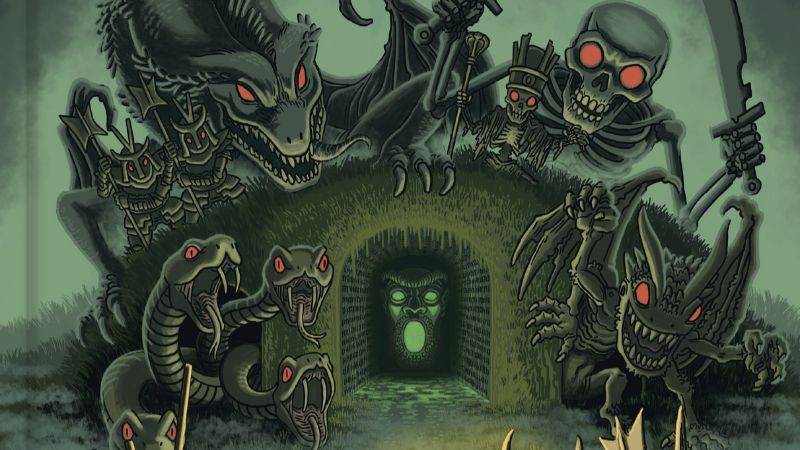
The appendix adventure (entitled “Tomb of the Shadow Serpents”) is a tight one-to-two-session level 1 dungeon crawl: the legendary wizard Venger baits the party into raiding one of his “testing ground” tombs with the promise of real treasure, when the actual point is that he’s auditioning them for future schemes.
Twelve keyed areas mix natural cave with carved stone, gated behind a genuine serpent-puzzle door, using stock Monster Manual threats (Ghouls, a Worg, Animated Armor). It’s perfectly serviceable, and the text explicitly suggests reskinning higher-level tombs (from Tomb of Annihilation or Vecna: Eve of Ruin) as sequels, which is a nice hook.
But let’s not oversell it. Twelve rooms of stock monster reskins reads a lot like a low-effort excuse to get Venger’s name in front of fans who know he actually is, and it’s the one part of the book I’d call filler rather than content.
*** END OF SPOILERS ***

What is the art and design like?
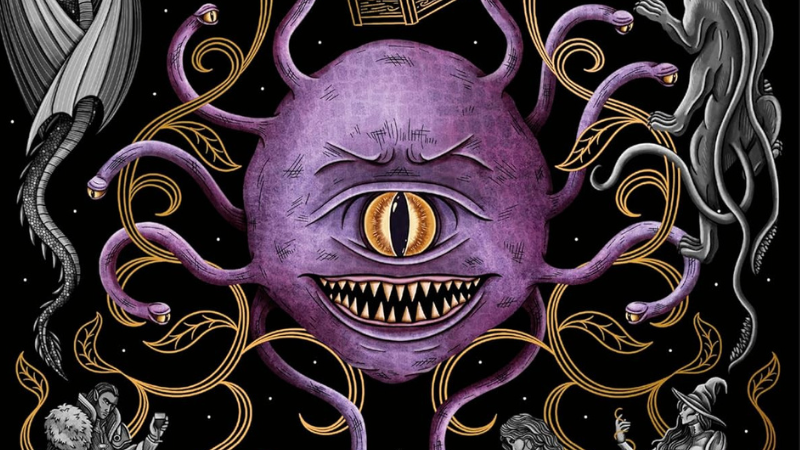
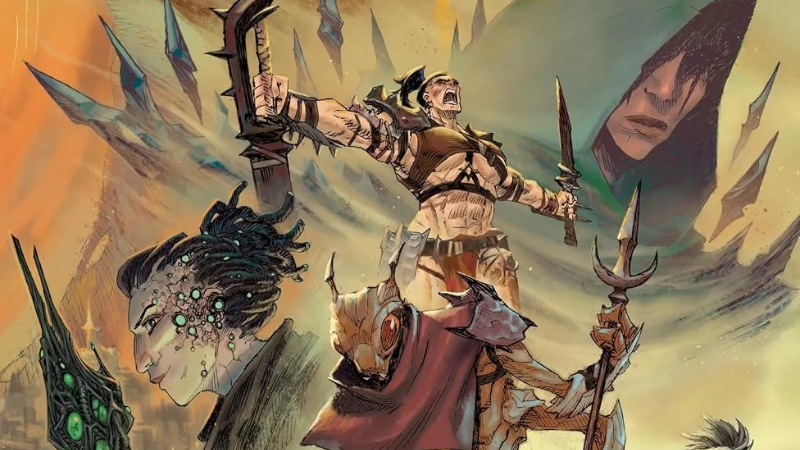
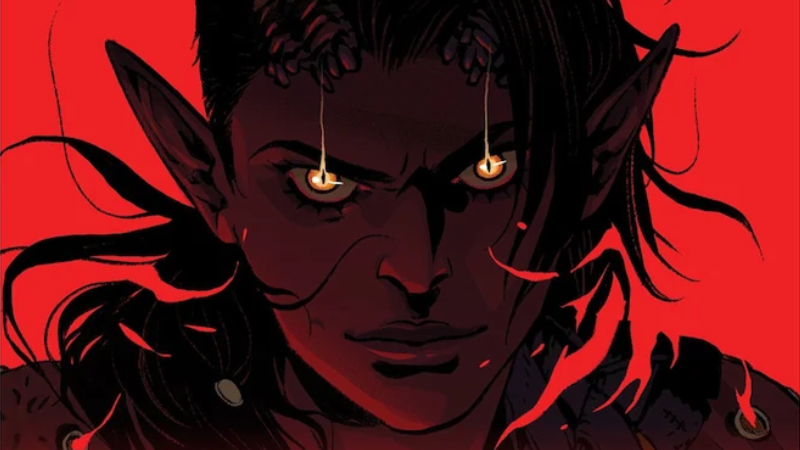
As with most recent WotC D&D product, the artwork is absolutely gorgeous. The cover, by Javier Charro is stunning and it features work from 40 interior illustrators, including Julie Dillon, Magali Villeneuve and Kevin Glint. All of the images are incredible and really help bring the book to life.
The writing is also evocative and entertaining, managing to pack in a ton of information without getting too bloated. There’s a reason why D&D is the biggest TTRPG company on the planet, and the quality of their designers reflects that status.

When will Arcana Unleashed be released?
Arcana Unleashed will be available on September 15th, 2026. As with previous D&D books, if you pre-order from D&D Beyond and local game stores who have opted into the early release program, you’ll be able to receive digital and physical copies as of August 24th.
The book is also a major part of the new D&D Seasons, which is a concept that connects new books and community events around a specific theme. In the case of Arcana Unleashed, it’s part of the ongoing Season of Magic, which runs from July to September 2026 and includes tie-in products and organized play events tied to high magic.

How much is Arcana Unleashed?
The physical hardcover book retails for $49.99 USD (not including shipping and handling). The D&D Beyond digital version retails for $29.99 USD. You can also purchase a digital + physical bundle that will retail for $79.99 USD (although it is currently discounted to $59.99 USD for pre-orders).
You can also purchase the Arcana Unleashed: Ultimate Bundle which retails for $129.99 USD and includes both the digital and physical version of the book, as well as the associated Deadfall adventure.

Is there an alternate cover available?
Yes, as with other recent D&D books, there is an alternate cover of Arcana Unleashed. The price is exactly the same as the regular version and it’s available exclusively at local game stores.
The alternate cover is illustrated by Polish artist Couple of Kooks, who has contributed art to numerous other D&D products, including interior work featured in the 2024 Player’s Handbook and 2024 Dungeon Master’s Guide. He also contributed the alternate cover to the 2024 Book of Many Things supplement.

What other tie-in products are there?
In addition to the main sourcebook, Wizards of the Coast will also be releasing:
- Arcana Unleashed: Deadfall: A Level 11-20 campaign featuring magical espionage and involving a civil war taking place between the Red Wizards of Thay .
- Arcana Unleashed Map Pack: A collection of 10 digital and physical maps.
- WizKids Minis: A collection of new miniatures featuring monsters from the campaign.
- Arcana Unleashed Platinum Edition: A high end box set from Beadle & Grimm’s that ties into the Deadfall adventure.
Arcana Unleashed will also be part of Season 2 of the upcoming Dungeon Masters actual play series.

Final thoughts
Here’s the thing about Arcana Unleashed: it’s not consistently great, but it’s great often enough, and specifically enough, that it’s worth picking up. I didn’t expect a faction chapter to be the best thing in a WotC hardcover this year, but it is. I didn’t expect a chapter on building magical words to be so engrossing, but it si. I didn’t expect the Feats to be a highlight either, and they might be the best set WotC has printed since the core rules.
Where it falls down though, is in the same familiar areas we’ve seen from other D&D 5.5E books: The subclasses are mostly updates of older materials, the spells are largely forgettable and the monsters are mostly reskins. None of that is a dealbreaker on its own though, and the positive more than outweighs the negative.
In the end, I came in skeptical of a mixed bag of magical goodies and instead found a tome worth picking up. It’s imaginative, mostly well-built, and worth owning even if you never touch its companion campaign book. Just go in knowing which chapters are the real reason to buy it.
Arcana Unleashed is slated for release on September 15th, but you can pre-order it now from local game stores, D&D Beyond and Amazon.
A review copy of Arcana Unleashed was provided by Wizards of the Coast
See Our Complete D&D Book Coverage
Visit our D&D Books page for more reviews of the latest novels and game books.

Jason Volk is the Publisher of Dungeons & Dragons Fanatics and lives in the wilds of Western Canada. He has been playing D&D for over 25 years and is a huge fan of Dragonlance and the Forgotten Realms. His favorite character of all time was a Necromancer named Neek who spent most of his adventuring career resurrecting the corpses of slain monsters. When he’s not playing TTRPGs, Jason enjoys video games, Magic: The Gathering, Warhammer 40K, watching football and spending time with his wife and adorably nerdy children.
Follow him on Bluesky or on Instagram