

The Future of D&D With Wizards of the Coast Designer Shawn Merwin
As an Amazon Associate I earn from qualifying purchases.

In this interview, D&D Fanatics’ Jason Volk sits down with veteran tabletop RPG designer Shawn Merwin to discuss his incredible career working for publishers Ghostfire Gaming and Wizards of the Coast, and what he sees next for the future of Dungeons & Dragons.
Shawn also discusses the challenges of game design, the big shifts taking place in the industry, making kick ass adventures, and how fans are reshaping the tabletop RPG industry.
[Please note that the transcript below has been edited for clarity and length.]

Shawn’s Journey Into Game Design
Jason Volk: For those who don’t know you – though I think most people in the industry do – could you give a little introduction of yourself?
Shawn Merwin: For sure. My name is Shawn Merwin. I’ve been doing freelance work in the roleplaying game space since about 2000. I started by working on organized play campaigns for Wizards of the Coast – the first one was a third-edition campaign called Living Greyhawk, which was sort of the Adventurers League of third edition. I was working full-time in a different field, but volunteering my free time on that. In 2018, I went full-time as a freelancer, and spent two or three years doing that. In 2021, I joined Ghostfire Gaming full-time as lead executive designer – which means lead designer, plus I answer to the bosses. Then, at the beginning of this year, I joined Wizards of the Coast as a contract game designer. That means I’m not an actual full-time employee, but I do full-time work for them on a contract basis, doing whatever they need. That’s the short version of this twenty-five, twenty-six-year expedition.
Jason Volk: Amazing. And taking a step back – how did you end up getting into D&D or RPGs in the first place?
Shawn Merwin: I’ve been playing since before I was nine years old, back in the AD&D first-edition days. Growing up, I was one of those kids who thought, “Wouldn’t it be great to do this for a living?” But it wasn’t really an industry you could break into – there wasn’t an open gaming license, so you couldn’t even make material for it and sell it. So I was going to be a teacher, then ended up as a technical writer. But I always loved writing, always loved making this stuff, so I’d sort of given up on that dream. Then third edition came out and the Living Greyhawk campaign started. They needed volunteers because they were creating hundreds, if not thousands, of adventures across the world, and the region I lived in was handed the region for Greyhawk. My first job – a volunteer position – was editing adventures and making sure they got produced: reaching out to writers, editing their work, getting it out to players. Right away I was thrust into not just designing, but editing, producing, and running playtests. I was getting immersed in every corner of the industry without really knowing it, and that’s when I realized I had a skill set that matched. Luckily, the folks at Wizards overseeing the campaign saw I was doing a halfway decent job, so when little things came up – “we need someone to write this adventure for Dragon magazine,” or “we need someone to work on this,” sometimes without even getting credited – I was just always there, always saying yes. It’s what they say about the military: if you’re always the volunteer, always raising your hand, that’s how you get noticed for the next opportunity. It took about twenty years to really catch fire and get noticed deeply in the industry, but once people recognized that I knew what I was doing at least 99% of the time, the opportunities came more readily.
Jason Volk: Was there a tipping point where this went from a hobby to something you realized could be an actual career?
Shawn Merwin: There wasn’t one single tipping point, but the real crux of it was when fourth edition started. I was given the playtest rules because I was overseeing a different organized play campaign, so I had a preview copy of the rules as new versions were released. Wizards reached out and said they were restarting Dragon and Dungeon magazine digitally and needed content right away – could I write some stuff? I said sure. So I was overseeing this organized play campaign, which is a ton of work, writing articles for these two digital magazines, and then they reached out again: one of their writers on a published off-the-shelf adventure got switched to a different project – could I co-write it? That felt like the big time. Just having access to those rules made me valuable when all this content was suddenly needed, and that’s when I realized being in the right place at the right time is enormously important. That’s when the notion of “maybe I could actually do this” started to take root.

The “Three F’s” of Game Design
Jason Volk: I find it interesting that you did some work as a technical writer – I studied technical writing myself, and I often think about that when I look at your modules and adventures. Where do you see the line between writing, which is what people think you’re doing when you create an adventure, and designing? Where do those two meet?
Shawn Merwin: It starts with thinking. I teach a class every other semester at the local college – writing for roleplaying games, part of the creative writing curriculum. What I’ve realized watching students come through is that the ones who took the time to think clearly generally ended up writing clearly. Clear writing matters for everything – even poetry, where you’re using imagery, flowery language, similes and metaphors – because if you can think clearly, if you know what you actually want to say, it’s much easier to find the words for it. Once you have that base, you can start playing with different forms and modes of expression. Honestly, technical writing and game design aren’t that different. It’s the same question: what am I trying to say? Whether you’re writing an adventure and need to tell the DM how a scene should play out, or dealing with game rules and need to think through the ramifications of introducing a new rule – what does this weapon property do, and what does it mean for other feats or abilities that interact with it, how does it change the game – that clear thinking leads to clear writing.
Jason Volk: That makes sense – it’s less about creative writing for its own sake and more about expressing a concept and understanding how people will actually use the content at the table.
Shawn Merwin: Exactly. And that leads into something I’ve talked about on other interviews and on my podcasts – a framework I call the three F’s of design. I honestly don’t remember if I borrowed this from someone or came up with a version of it myself, but when you write for roleplaying games, you have to think about three things. It needs to be fun – you want players to love playing it and GMs to love running it. It needs to be flavorful – it has to interact with the setting and the world in a way that illuminates that world, whether it’s an adventure that draws in details about a town or an evil force, or a rule like a feat or subclass that does what rules do while also building up the setting around it. And the third F – I won’t swear, so let’s say it’s freaking balanced. Balance gets thrown around a lot in game design, and people think it means everything has to be mathematically identical. That’s not really what balance is. To me, balance means that if there are options available to a player or GM, they aren’t always taking one option over all the others, and they aren’t always avoiding one option in favor of everything else. You want something reasonable that people actually want to use, without it being overpowered or hurting them by being underpowered. So: fun, flavorful, and freaking balanced.

Staying Positive in a Sometimes-Negative Hobby
Jason Volk: Sometimes there’s a lot of negativity online about a hobby that’s supposed to be fun – it’s not supposed to raise your blood pressure. One thing I love about your podcast, Mastering Dungeons, which you co-host with Teos, is that you’re both extremely positive about the hobby, to the point that ragebait content would probably get you more engagement, but you’ve deliberately chosen a positive approach. Why?
Shawn Merwin: I think Teos and I share a love of the game that isn’t just something we like – it’s something we’ve lived. I’ve seen, in real time, the power roleplaying games have. I’ve seen parents bring in kids who are autistic or non-verbal, and the parent says, “He doesn’t talk, but he’ll roll the dice, and he’ll let you know” – and then the kid starts talking once they’re engaged with the game. I’ve seen the love of this game pull people out of very messy lives, or lift them up. I know that power is real, and the people who are negative about the hobby either haven’t seen that, or are ignoring it. I was at a convention called Gamehole Con in Madison, Wisconsin, on a panel, and someone in the audience asked, “How can you work for Wizards when they’re doing this and that?” I’ve talked about this before – compared to companies that are actively destroying the environment or harming people, Hasbro and Wizards get voted one of the most altruistic companies around. But I answered it this way: I asked the room, “How many of you have had your lives changed by Dungeons & Dragons and roleplaying games?” There were maybe a hundred people there, and at least ninety raised their hands. I said, “You just answered the question. This is why we do it – because we want this love we have for the game to raise people up.” As a kid I remember people saying TSR was just trying to get your money, but what does a ten-year-old know about the world? Now that we have the internet, where people can interact more but also seek validation for grievances, you’re always going to get that kind of noise. It’s always been there – it’s just louder now.
Jason Volk: That’s exactly what I love about you and Teos – you’re critical when there are real issues with design or with WotC, but the positive approach is a much better way to engage with the hobby than an oversized emphasis on negativity.
Shawn Merwin: It’s funny – I either get accused of being an AI, or I get accused of being a shill for Wizards. I take a similar approach to you: I’m only going to write about things that are either neutral or that I actually enjoy, because life’s too short to crap all over everything.

Grognards versus New Players
Jason Volk: I think there’s a divide in the hobby between the grognard and OSR crowd – which I love, I grew up on the red box – and a new generation of players who came in through fifth edition and the pandemic and don’t know what the OSR even is. Do you see that kind of schism, and does it feel like WotC is trying to thread the needle between the two?
Shawn Merwin: There are many audiences for everything – many audiences for Star Wars, many audiences for roleplaying games. You want to bring as many people into the tent as you can, but you also have to recognize that not everything is for everyone. As someone who’s worked for big companies – and I don’t speak for Wizards of the Coast here – you want your audience to grow, but if you try to serve your entire audience with everything you make, you end up serving no one. Sometimes you make a product that disappoints one set of fans in order to serve another, and there’s not much you can do about that. I don’t see the divide as starkly as it’s sometimes depicted online, because my experience is different from other people’s – I see folks who’ve been playing since 1970-whatever who love fifth edition and the new art and the changes, and I see people who’ve only played for four years who are upset that anything has changed since they started. It’s more a mindset of change versus sameness, nostalgia versus modernity, than it is about any particular group or age. Some of the most small-c conservative people, who don’t want any change whatsoever, are young folks upset that the anime they started watching in 2022 is different now. We all need to understand that not everything is for everyone, and that’s okay – with the game’s popularity, there’s always going to be something for you, even if it’s not from Wizards directly. There are third-party creators out there, some who’ve worked at Wizards before and some who will in the future, making great stuff you might like.
Jason Volk: And D&D is kind of whatever you want it to be – you don’t have to play it any particular way, you can drop whatever rules you want. It feels like Dark Sun has run into some of that recently.
Shawn Merwin: Teos, my co-host on Mastering Dungeons, is the biggest Dark Sun fan, and he definitely has opinions. There are so many voices and points of view that there’s always going to be some side of an issue that disagrees, even if they’d agree on 99.9% of everything else – “why did you add this, why didn’t you add that.” Designers can’t add every aspect of everything; they have to make choices, for a variety of reasons, and once a choice is made, it’s there. You can use it, you can change it, or you can not engage with it. Or, apparently, you can complain and accuse everyone of everything – but in the long run, that’s just noise. You also get a distorted view of things looking through an online lens. People are naturally more vocal when they’re upset; when people are in a good mood and having fun, no one’s shouting about it online.
Jason Volk: The anonymity of the internet is interesting too.
Shawn Merwin: Very. I’ve had people at conventions come up and say, “I love your work,” and when I ask their name, they’ll give me their online handle – and it turns out to be someone who’s told me online that I should be hit by a bus. In person: “Oh no, I love your work.” Online: a completely different story. It’s impossible to sort it all out. The joys of the internet.

Wearing Two Hats: Community Voice and Professional Designer
Jason Volk: You have an interesting perspective because you’re both commenting on what’s happening in the hobby and actively involved in it – you’re a contractor with Wizards of the Coast, you’ve done a ton of work for them, including introductory adventures my own daughter’s school has played. There are other influencers too, like Mike Shea, who are on advisory panels while also being paid for their work. How do you balance that?
Shawn Merwin: I balance it by being as honest as I possibly can without breaking any contractual obligations. I think it’s important for people to understand this whole world – the process, the industry, the art of designing. The more you understand it, the clearer and easier it becomes to see why things are done certain ways. I wish I could talk even more about the design work I do, because I think it would make things clearer – why this ability instead of that one, why this choice. There’s rarely one single reason. Even behind the scenes at Ghostfire, I’d have arguments and discussions with other people – “we can’t do it this way because of that, but if we change this, then we could” – and there are business reasons, monetary reasons, technological reasons, all sorts of reasons things get made the way they do. I understand because I used to be one of the people on Yahoo Groups in the early 2000s saying, “this is the dumbest thing I’ve ever seen, why would they do it this way” – not realizing designers couldn’t explain themselves because they were under NDA. When I started to realize I was the one who didn’t understand – that something had to happen a certain way because it was part of a box set, and a box set has its own publication constraints – I felt pretty dumb for having complained. That’s part of why I do interviews like this, why I teach: I want reasonable people who are willing to listen to logic to understand that some things you think are the worst choice ever are actually the best of several bad choices.
Jason Volk: It’s easy to cast stones without any concept of what actually goes into the work. I appreciate that you’re honest about that, even when you have to say “no comment” on some things.
Shawn Merwin: You can be sure that people like Teos and Mike Shea and I, if we see something we think is genuinely problematic, even if we’re not saying it publicly, we’re saying it privately – directly to the people involved.
Jason Volk: I feel like you, Teos, and Mike Shea – Sly Flourish – have all been pretty open with criticism when it’s warranted, and upfront that you’re also sometimes paid as a consultant. That feels genuine rather than just taking the money and running.

Where D&D Is Headed Next
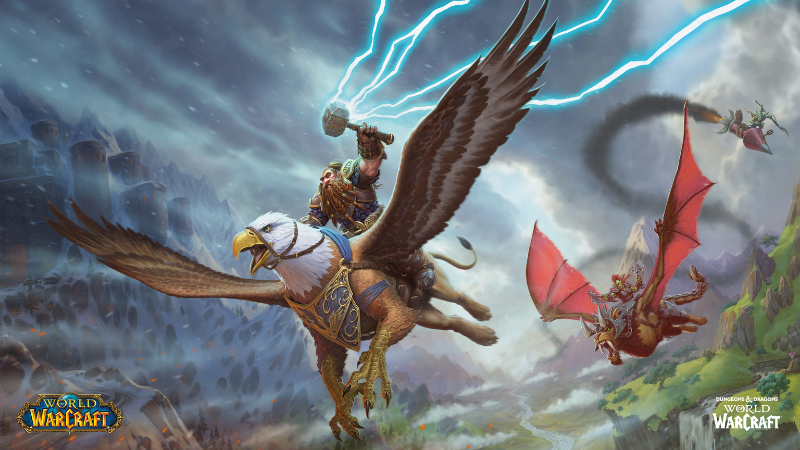
Jason Volk: Without stepping on your NDA – we’ve seen some pretty radical changes with the 2024 rules, a huge influx of new players, and D&D expanding into things like Star Wars and Warcraft through Universes Beyond. Where do you see the game heading, big picture?
Shawn Merwin: I love the new and growing audience, and I think what we’re going to see is a more diverse set of content – not necessarily diverse in the demographic sense, but new content delivered in new ways, targeting new audiences in how they play. We’re going to see more digital delivery – things like D&D Beyond Drops giving new content every month, speaking to the audience that’s leaning forward at their desk waiting for something new, which may not even register for people who just wait for the one big book each year. We’ll see it target players who are used to a physical table with or without miniatures, as well as players who want a virtual tabletop where everything’s connected. In general, expect diversity of content, diversity of technology, and diversity of delivery that will speak strongly to certain groups while simply not being for others – which is fine. It doesn’t have to be for everyone.

Making D&D Easier to Learn
Jason Volk: I once heard an interview with Mike Mearls, one of the lead designers across multiple editions, who said he was surprised there wasn’t a more simplified, rules-light version of D&D for younger or newer players. Given your background teaching people how to play and writing introductory adventures, do you feel that’s something missing from the game – that it’s become more complicated without that lighter on-ramp?
Shawn Merwin: That’s a hugely important lesson we learned, especially starting around 2019 with the pandemic – we’d reached a point where people were having trouble communicating with each other because of technology, phones, screens. That was really exemplified during the pandemic, when I had parents calling, texting, or emailing me saying, “I know you do stuff with D&D – I need to get my kid into this, how do I do that?” I couldn’t just say “it’s easy, just do this,” because the things that existed for younger kids were often coloring books or novels – there wasn’t really a resource I could point a parent to when neither the parent nor the kid knew how to play. That’s why I was so excited when Shelly Mazzanoble at Wizards asked me to work on Peril in Pinebrook, the adventure sent to schools as part of a curriculum kit. That was my answer to “what do we do if we need to teach new or younger players, or new and younger DMs, how to play” – though I only had a few weeks to put it together. Do I think there needs to be an easier entry point? Absolutely. I think the new starter set, Heroes of the Borderlands – not Keep on the Shadowfell, wrong edition – is a big step in the right direction, with its cards and components and simplified explanations in the rulebook. Hopefully we’ll see more in that direction: a rules-light track alongside the main rules.
Jason Volk: I’d love to see that too. Some people I play with love min-maxing, and others are like, “I forget what my character does – I’m here for a good time, some fart jokes, some chips, and killing some goblins.”
Shawn Merwin: You just described my own group, and they’re all forty and fifty years old. It’s cool to have that mix of players – it keeps you on your toes.

The State of Organized Play
Jason Volk: Switching gears – you got your start in organized play, and it seems like Wizards is trying different things there. We have Legends of Greyhawk now, which isn’t quite the old Adventurers League, and AL itself feels like it’s fallen a bit by the wayside. Do you feel organized play has been neglected, and how important is it for getting players involved?
Shawn Merwin: I wouldn’t say it’s been neglected – I think it’s an ever-evolving conundrum about how to best spend the money, because it’s not cheap to run and it doesn’t make much money. The adventures are free, they’re sent out for D&D Encounters, kits go out to stores – that’s all an expense aimed at growing the hobby. These organized play programs generally run on the backs of volunteers, and some of those volunteers are absolutely amazing evangelists for the hobby – but the burnout is real. I’ve seen it in myself and in other people: your love for something can burn so deeply it incinerates you from the inside, and you need to step back. Chris Tulach, who runs organized play at Wizards, came up through the ranks with me in Living Greyhawk – he’s been there since around 2006 or 2007, going on twenty years now, with a lot of experience on both the D&D and the Magic side. Magic’s organized play, like Friday Night Magic, hums along really well, but it’s a bit different because players are buying packs of cards to participate. Taking lessons from that side while making something work for D&D is a real challenge. Chris works incredibly hard both to build programs that work and to show his bosses, with data, that, say, twenty thousand people showed up at an event worldwide, and this is how the hobby grows. It’s important, but it’s a tough nut to crack.
Jason Volk: I think they’re taking steps in the right direction. It’ll be interesting to see how it keeps evolving.

What Fuels Shawn’s Creativity
Jason Volk: Beyond being influenced by RPGs themselves, what else drives you. What fuels your passion for design?
Shawn Merwin: As a kid, it was just reading and games. Hearing stories and telling stories – I loved sitting and listening to relatives or friends tell wild stories. And I loved games. As someone who sometimes had trouble communicating as a kid, I loved sitting down and figuring things out within a smaller sphere – I didn’t have to understand the entire world, just this board, these dice, how the pieces moved. If I could master that, I could master the next thing, and the next. There’s no greater collision of storytelling and games than roleplaying games. What keeps me going now is watching people play – friends, family. I love any game I can get into, from tic-tac-toe to Gloomhaven to the most intensely complicated board games my family hates playing with me. My brain just works that way – I like figuring out how things work.
What’s Next: Original Worlds and Fan-Driven Projects
Jason Volk: Have you thought about doing your own larger project outside your existing work? We’re seeing a lot of designers who’ve worked with Wizards launch their own Kickstarters or games.
Shawn Merwin: I sort of got to do that at Ghostfire Gaming with a world setting called Arora, a dragon-apocalypse setting – that was the thing I’d always thought, “if I could make my own world, this is what I’d make,” and I got to do it. I have tons of ideas, but they generally end up folded into whatever else I’m working on. Right now, through the Patreon for Mastering Dungeons, I’m working on an adventure we’re building one encounter at a time – giving it to our patrons and asking, “okay, what do we do next? Do you want to go this way or that way? Do you want to see new feats, or new equipment?” I’m building a world, a setting, and an adventure through that process, just to see how it goes, because I think it’ll be fun.
Jason Volk: I love the idea of real fan input shaping things as they’re designed.

Where to Find Shawn
Jason Volk: To wrap up, where can people find you online, and what are you working on next?
Shawn Merwin: You can find me on most social media as Shawn Merwin. Check out Mastering Dungeons – we’re on YouTube – and also the Eldritch Lorecast, which I do through Ghostfire Gaming; you can catch the streams on YouTube if you search for those. As for what I’m working on next – I can’t tell you, but it’s exciting.
Below is also the video version of the interview.
See Our Complete D&D Book Coverage
Visit our D&D Books page for more reviews of the latest novels and game books.
Subscribe to D&D Fanatics
Get exclusive D&D news, reviews and rules updates delivered right to your inbox.

Jason Volk is the Publisher of Dungeons & Dragons Fanatics and lives in the wilds of Western Canada. He has been playing D&D for over 25 years and is a huge fan of Dragonlance and the Forgotten Realms. His favorite character of all time was a Necromancer named Neek who spent most of his adventuring career resurrecting the corpses of slain monsters. When he’s not playing TTRPGs, Jason enjoys video games, Magic: The Gathering, Warhammer 40K, watching football and spending time with his wife and adorably nerdy children.
Follow him on Bluesky or on Instagram