

The Path of the Death Knight (D&D 5.5E Deep Dive)
As an Amazon Associate I earn from qualifying purchases.
In the lore of Dungeons & Dragons, there are few undead as iconic as the Death Knight. The ranks of these unholy warriors are filled with deserters, traitors, cowards and oath breakers who have been raised from the grave and granted dark powers. Over the years, Death Knights have also appeared in countless D&D game supplements and novels, with the most infamous example being Lord Soth, who has been a staple in both the Dragonlance and Ravenloft settings (including the upcoming Horrors Within supplement).
And while for decades these cadaverous champions have existed solely to challenge high level characters, a recent Unearthed Arcana actually allows players to become Death Knights. Entitled Villainous Options, the playtest material introduces the Path of the Death Knight, a series of Feats that when completed allow characters to transform into one of these dread defenders.
So is this terrifying new path worth going down? Below, we face down all the dark details.

What is a Death Knight in Dungeons & Dragons?
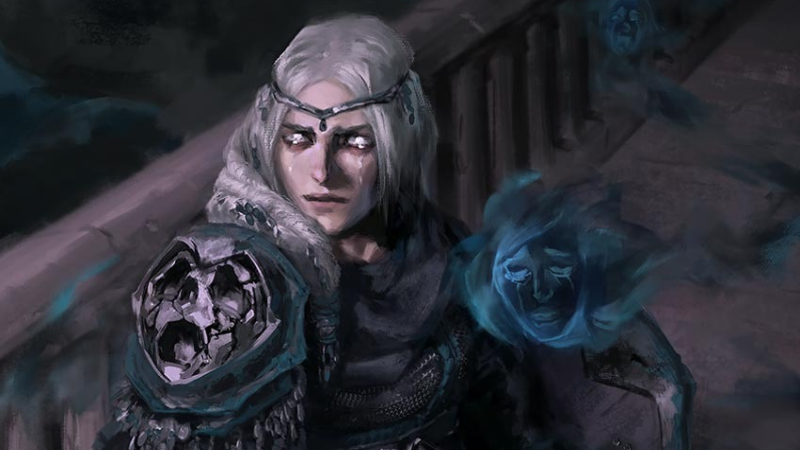
Death Knights are powerful undead warriors who are resurrected by dark magic, evil gods or foul otherworldly beings to serve as champions and battlefield commanders of undead and monstrous armies. In life, they were primarily elite warriors chosen to become Death Knights after committing a grave and unforgivable sin. While physically they appear as rotting corpses with pinpricks of light for eyes, they are also incredibly powerful, wielding blades enchanted with necromantic energy and possessing the ability to control nearby undead. They can also summon phantom steeds (such as a Nightmare or other undead mount) and can also wield hellfire and other powerful magic. Even if destroyed, a Death Knight will reform days later with a new body, and only by atoning for their sins can they truly end the cycle of death and resurrection.
Across the D&D multiverse, multiple worlds have been terrorized by Death Knights. Among the most infamous is Lord Soth, a fallen paladin from the world of Krynn who was eventually cursed by the Dark Powers to become a ruler of the Domain of Dread known as Sithicus. In the lands of Faerûn, notable Death Knights include Vanrak Moonstar (a noble explorer from the city of Waterdeep cursed by the dark goddess Shar), King Imbrar (a fallen paladin who ruled the land of Impiltur with a skeletal fist), Miltiades (a disgraced servant of Tyr from the lands of Phlan), Hekaton (the transformed king of the storm giants) and Olanthius (a death knight who stalks the fiery pits of Avernus). In the world of Oerth, one of the most infamous examples is Saint Kargoth, a former nobleman who was cursed by the demon prince Demogorgon.

What is the Path of the Death Knight?
The Path of the Death Knight is a character option for D&D 5.5E currently in playtest. It’s built around completing sequential Feats and involves the following steps:
Step 1: The Path starts by you choosing a Death Knight Journey. This represents the ultimate sin you committed that will lead to your transformation. There is no level requirement for this and it’s really meant to provide a narrative framework for the path.
Step 2: At Level 4, you must then take the Death Knight Initiate Feat.
Step 3: At any point from Levels 5 to 11 you must then choose at least one more Feat from the options of Dread Authority, Harbinger of Doom, Deathly Presence or Unholy Steed (notably, for the latter two Feats you must be level 8 or higher).
Step 4: At Level 12 or higher you take the Death Knight Ascension feat which completes your transformation.

What are the Path of the Death Knight Feats?
Death Knight Journeys
While each death knight is unique, every death knight’s descent into villainy begins with a significant and dishonorable act—a deliberate wrongdoing or shameful mistake that marks their disgrace. You can roll on or choose from the Death Knight Journeys table to determine why your character has chosen to walk this path.
| 1d6 | You Fell from Grace When You … |
| 1 | Abandoned your companions in battle. |
| 2 | Betrayed a loved one. |
| 3 | Intentionally harmed an innocent. |
| 4 | Made a pact with a malevolent entity such as a demon lord. |
| 5 | Offended a benevolent god |
| 6 | Violated a sworn oath. |

Death Knight Initiate
Prerequisite: Level 4+, Weapon Mastery Feature
- Ability Score Increase. Increase your Strength or Charisma score by 1, to a maximum of 20.
- Death Points. Your dedication to the path of the Death Knight gives you access to profane powers of undeath. Your ability to use such powers is represented by Death Points. You have a number of Death Points equal to your Proficiency Bonus. You regain all expended Death Points when you finish a Long Rest. You can expend Death Points to use certain Path of the Death Knight benefits. This feat gives you one such benefit: Dread Strike.
- Dread Strike. You always have the Wrathful Smite spell prepared. Charisma is your spellcasting ability for this spell. You can cast it without expending a spell slot by expending 1 Death Point. When you expend Death Points to cast Wrathful Smite, the target has Disadvantage on Wisdom saving throws to avoid or end the spell’s effect. You can also cast the spell using any spell slots you have.

Dread Authority
Prerequisite: Death Knight Initiate Feat
- Ability Score Increase. Increase your Constitution or Charisma score by 1, to a maximum of 20.
- Dread Command. You always have the Command spell prepared. Charisma is your spellcasting ability for this spell. You can cast it without expending a spell slot by expending 1 Death Point. You can also cast the spell using any spell slots you have. When you expend Death Points to cast Command, Undead targeted by it have Disadvantage on the saving throw against the spell.

Harbinger of Doom
Prerequisite: Death Knight Initiate Feat
- Ability Score Increase. Increase your Strength, Constitution, or Charisma score by 1, to a maximum of 20.
- Ill Omen. You always have the Bane spell prepared. Charisma is your spellcasting ability for this spell. You can cast it without expending a spell slot by expending 1 Death Point. You can also cast the spell using any spell slots you have. When you expend Death Points to cast Bane, affected targets subtract 1d6 from attack rolls and saving throws instead of 1d4.

Deathly Presence
Prerequisite: Level 8+, Death Knight Initiate Feat
- Ability Score Increase. Increase your Strength, Constitution, or Charisma score by 1, to a maximum of 20.
- Awful Presence. You always have the Fear spell prepared. Charisma is your spellcasting ability for this spell. You can cast it without expending a spell slot by expending 1 Death Point. You can also cast the spell using any spell slots you have. When you expend Death Points to cast Fear, you deal 7 (2d6) Psychic damage to each creature that fails its saving throw against the spell, in addition to the spell’s normal effects.

Unholy Steed
Prerequisite: Level 8+, Death Knight Initiate Feat
- Ability Score Increase. Increase your Strength or Constitution score by 1, to a maximum of 20.
- Spectral Steed. You always have the Find Steed spell prepared. Charisma is your spellcasting ability for this spell. You can cast it without expending a spell slot by expending 1 Death Point. When you expend Death Points to cast Find Steed, the summoned steed is a Fiend, and targets you choose have Disadvantage on the Wisdom saving throw against its Fell Glare. You can also cast the spell using any spell slots you have.

Death Knight Ascension
Prerequisite: Level 12+, two Path of the Death Knight Feats
Your path to becoming a death knight is complete. You gain the following benefits:
- Ability Score Increase. Increase your Strength or Charisma score by 1, to a maximum of 20.
- Undead. Your creature type is Undead.
- Unholy Anatomy. You have Resistance to Necrotic and Poison damage. You don’t gain Exhaustion levels from dehydration, malnutrition, or suffocation.
- Hellfire Orb. As a Magic action, you can expend 1 to 5 Death Points to throw an orb of pure hellfire at a point you can see within 120 feet. Each creature in a 20-foot-radius Sphere centered on the chosen point makes a Dexterity saving throw (DC 8 plus your Charisma modifier and Proficiency Bonus). On a failed save, a target takes 2d6 Fire damage and 2d6 Necrotic damage per Death Point expended. On a successful save, the target takes half as much damage.

Is the Path of the Death Knight worth taking?
The Path of the Death Knight is still in playtesting so we could see some significant changes before it’s finally released. It’s also worth noting that Wizards of the Coast hasn’t confirmed what book (if any) the Path will appear in (although the most likely candidates seem to be a new version of The Book of Vile Darkness), so we’ll be keeping an eye on this character options in the months ahead.
In the meantime, you can learn more and download the Path of the Death Knight for yourself now via the “Villainous Options” Unearthed Arcana playtest.
More D&D News Coverage
For more from the world of Wizards of the Coast, visit our D&D News page.

Jason Volk is the Publisher of Dungeons & Dragons Fanatics and lives in the wilds of Western Canada. He has been playing D&D for over 25 years and is a huge fan of Dragonlance and the Forgotten Realms. His favorite character of all time was a Necromancer named Neek who spent most of his adventuring career resurrecting the corpses of slain monsters. When he’s not playing TTRPGs, Jason enjoys video games, Magic: The Gathering, Warhammer 40K, watching football and spending time with his wife and adorably nerdy children.
Follow him on Bluesky or on Instagram